
25 good habits for kids, and how to build them without nagging
Habits are the things a child does without being told. Build a few good ones early, and mornings, homework and bedtimes get much calmer — for everyone.
Here are 25 good habits grouped by type, which ones suit which age, and seven tricks that make them stick.
On this page
1. 25 good habits
Hygiene
- Brush teeth twice a day.
- Wash hands before eating and after the toilet.
- Bath every day and wear clean clothes.
- Cut nails every week.
- Cover mouth when coughing or sneezing.
Manners
- Say please, thank you and sorry.
- Greet elders — namaste, good morning.
- Knock before entering a room.
- Wait for your turn to speak.
- Share toys and food.
Study and learning
- Read for 10–15 minutes every day.
- Pack the school bag the night before.
- Do homework at the same time and place.
- Ask questions when you don’t understand.
- Keep books and pencils in their place.
Health
- Drink water through the day.
- Eat fruit and vegetables every day.
- Play outside for at least an hour.
- Sleep and wake at fixed times.
- Limit screen time (see how to reduce screen time).
Helping at home
- Put toys back after playing.
- Take your plate to the kitchen.
- Water the plants.
- Fold your own clothes.
- Switch off lights and fans when leaving a room.
2. Which habits at which age
| Age | Start with |
|---|---|
| 2–3 | Wash hands, put toys in a box, say thank you, brush teeth with help |
| 4–5 | Brush alone, greet elders, take plate to the kitchen, bedtime routine |
| 6–7 | Pack school bag, daily reading, fold clothes, homework time |
| 8–10 | Plan own homework, help cook simple things, manage pocket money, water bottle refills |
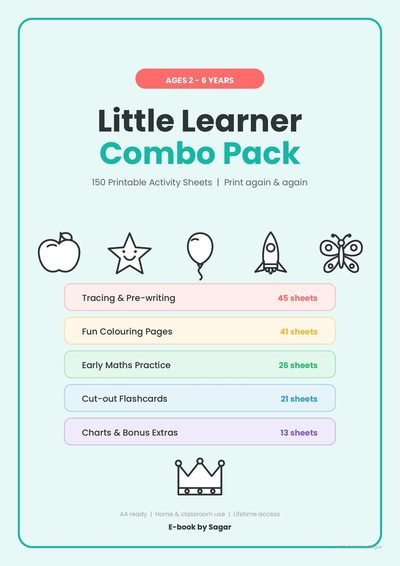 Our Little Learner pack includes printable daily routine and habit charts for ages 2–6. See the Little Learner Combo Pack →
3. A simple habit chart
Pick 3 habits only. Draw a grid with the habits down the side and the days across the top. Every time the child does one, they add a tick or sticker. Seven stickers in a row for one habit → a small reward, like choosing the weekend park.
| Habit | Mon | Tue | Wed | Thu | Fri | Sat | Sun |
|---|---|---|---|---|---|---|---|
| Brush teeth at night | ✓ | ✓ | |||||
| Pack school bag | ✓ | ||||||
| Read 10 minutes | ✓ | ✓ |
4. 7 ways to make habits stick
- Start with one to three habits, not ten. Add a new one only when the old ones run on their own (usually 3–6 weeks).
- Attach it to something that already happens: “after dinner, plate to the kitchen”.
- Make it easy: a low hook for the school bag, a step stool at the sink.
- Show, don’t tell. Children copy what you do far more than what you say.
- Praise the effort, specifically: “You packed your bag without being asked!”
- Use pictures for little ones: a picture routine on the wall beats verbal reminders.
- Don’t punish missed days. Just start again the next day. Streaks matter less than coming back.
Questions parents ask
What are 10 good habits for kids?
Brush twice a day, wash hands before meals, say please and thank you, greet elders, read daily, pack the school bag at night, drink water, play outside, sleep on time and put toys away.
How long does it take a child to form a habit?
Usually 3 to 6 weeks of doing it daily, sometimes longer. Small, easy habits form faster.
How do I teach good manners to my child?
Model them yourself, praise them when you see them, and practise with role play: greeting a guest, asking for something politely, saying sorry.
Do reward charts really work?
Yes, for a short time and for a few habits. Use stickers and small rewards, then slowly phase them out once the habit is automatic.
Little Learner Combo Pack: 150 printable worksheets
150 printable worksheets · ages 2 to 6
- Tracing, colouring, early maths
- Flashcards, charts and routines
- Print as often as you like
Print as many times as you like · Buy any 2 packs together and get 10% off