
How to keep kids busy without a mobile: 25 screen-free ideas
It is 6 pm. Dinner is on the stove, a work call is coming in five minutes, and your four year old is pulling at your dupatta saying "I'm bored". The phone is right there on the counter. One video, and you get twenty minutes of peace.
Every parent has been here, and handing over the phone sometimes does not make anyone a bad parent. But when the phone becomes the only answer to boredom, it quickly turns into a daily battle, and the tantrum when it is taken away gets bigger every week. The real fix is not willpower. It is having something else ready, right at the moment boredom hits. This guide gives you 25 ways to keep kids busy without a mobile, sorted by how much time and energy you have, plus a quick idea generator for the next time you are stuck.
On this page
- Why kids reach for the phone (and why it is hard to stop)
- Boredom buster: get an idea in one tap
- 5-minute activities
- Quiet activities for when you are busy
- Active play to burn energy
- Learning activities that feel like play
- The "busy box" system
- How to switch off the phone without a fight
- Questions parents ask
1. Why kids reach for the phone (and why it is hard to stop)
Videos and games are designed to be hard to put down: bright colours, fast cuts, endless next episodes. For a small child whose self-control is still developing, the jump from that to a quiet room feels huge. That is why the tantrum when the phone goes away is so intense — it is not naughtiness, it is a sudden drop in excitement.
The World Health Organization recommends no sedentary screen time for children under two, and no more than one hour a day for children aged two to four, with less being better. Most families with busy schedules find that hard. The aim does not have to be zero; it is to make the phone one option among many, not the default.
The trick that works best is simple: replace, do not just remove. If something interesting is ready the moment the phone goes away, most children switch far more easily. Our step-by-step guide on how to reduce screen time covers the long-term plan; this post is about what to hand over instead.
Give me an idea, right now
Choose your child's age and how much time you need to fill. Tap the button for a screen-free idea; tap again for another.
2. 5-minute activities (for the "I'm bored" emergency)
These need nothing and start instantly. Use them to bridge the gap while you set up something longer.
- Sock matching: tip a basket of washed socks on the bed and find the pairs.
- Simon says: "Simon says hop on one foot." Silly actions win.
- Hot and cold: hide a toy and give clues as they search.
- I spy: colours for two year olds, letter sounds for five year olds.
- Freeze dance: one song, freeze when the music stops.
3. Quiet activities for when you are busy
The hardest moments are when you need to cook, work or take a call. These activities keep a child near you, busy and quiet.
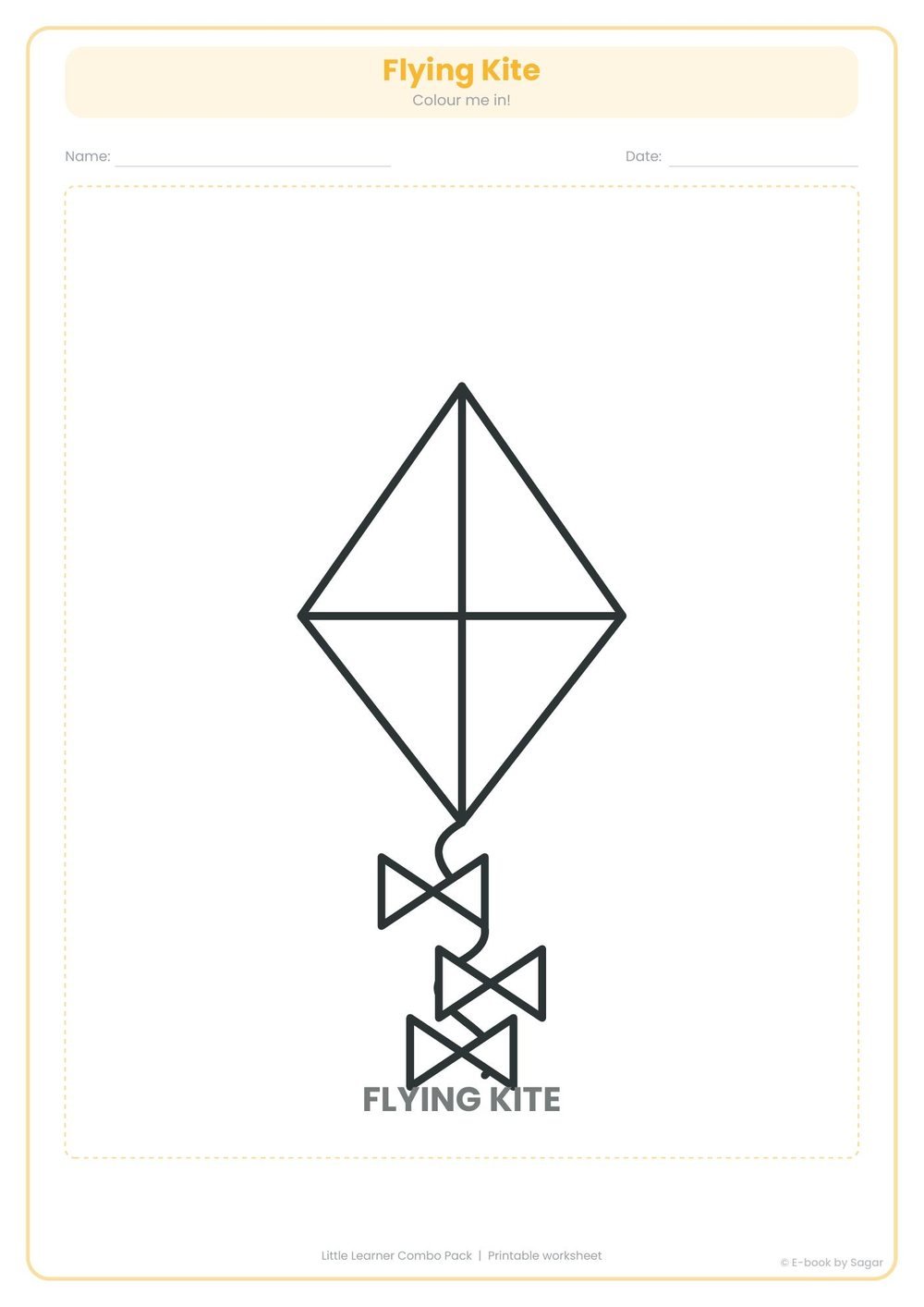
- Colouring pages: a fresh page and a box of crayons at the kitchen table. The simplest, most reliable quiet activity there is.
- Tracing worksheets: for four to six year olds, a tracing sheet is a puzzle with a clear finish line. Add a sticker on a reward chart when it is done.
- Sticker art: peeling and placing stickers holds toddlers' attention surprisingly well.
- Dough play: atta dough, a mini belan and a few cookie cutters.
- Sorting jobs: sort buttons, dals or coloured pom-poms into an ice-cube tray.
- Picture books: even before they can read, children happily "read" familiar books to their toys.
- Puzzles: simple jigsaws matched to their age.
4. Active play to burn energy
A child with energy to burn will not sit still for any activity. Ten minutes of movement first makes quiet time much easier afterwards.
- Pillow obstacle course: crawl under the table, jump over a pillow, walk along a line of tape.
- Balloon keep-up: do not let the balloon touch the floor.
- Animal walks: walk like a crab, hop like a bunny, stomp like an elephant.
- Ball games: roll, throw, kick into a "goal" made of two slippers.
- Nature hunt: on the balcony or in the park, find something round, something rough, a leaf and a stone.
- Water play: painting a wall or floor with plain water and a brush, on a hot afternoon.
5. Learning activities that feel like play
Screen-free time is a perfect chance to build school skills without any pressure. These activities quietly teach letters, numbers and fine motor control.
- Flashcard treasure hunt: hide letter or number cards around the room; read each one you find.
- Pretend shop: price toys at 1 to 5 rupees and pay with real coins.
- Kitchen counting: count rotis, spoons, potatoes; "give me three tomatoes".
- Letter of the day: spot one letter everywhere: on packets, signboards, books.
- Draw and tell: draw a picture, then tell you a story about it while you write it down.
- Simple crafts: paper boats, paper plate masks, sock puppets.
- Help with chores: folding napkins, watering plants, wiping the table. Real jobs feel important.
For more ideas that build hand strength, see 30 fine motor activities, and for counting games, how to teach numbers to kids.
6. The "busy box" system that makes it easy
The reason parents reach for the phone is not that they lack ideas. It is that in the moment, there is no time to think of one and set it up. A busy box solves that.
- Get a boxA shoebox or plastic tub that lives on a high shelf. It only comes down at "phone moments".
- Fill it once a weekFive printed worksheets or colouring pages, crayons, stickers, a small ball of dough, a few flashcards.
- Rotate the contentsChange it every Sunday. Novelty is what makes it exciting.
- Use it at fixed timesCooking time, work calls, the hour before dinner. Children quickly learn when the box appears.
Four steps to a busy box that replaces the phone at the hardest times of day
Because the box is special and changes every week, children look forward to it the same way they look forward to a video, and you never have to think of an activity on the spot.
7. How to switch off the phone without a fight
- Give a warning. "Two more minutes, then the phone goes to sleep." A timer they can see helps.
- Have the next thing ready. "When the phone sleeps, the busy box comes out." The replacement must be ready before the phone goes.
- Stay calm through the protest. The first few days are the hardest. The tantrum shrinks once the routine is predictable.
- Be consistent. If crying brings the phone back, crying becomes the strategy. Same rule, every day.
- Model it. Children notice how much adults use phones. Phone-free meals for everyone make the rule fair.
- Make bedtime screen-free. No screens in the hour before sleep helps children fall asleep more easily.
8. Questions parents ask
How can I keep my child busy without a mobile?
Have screen-free activities ready before boredom hits: colouring pages, tracing worksheets, dough, stickers, sorting games and simple kitchen jobs. A weekly busy box with fresh activities works especially well.
How much screen time is okay for a young child?
The World Health Organization advises no sedentary screen time for children under two and no more than one hour a day for children aged two to four, with less being better.
Why does my child throw a tantrum when I take the phone away?
Videos and games are very stimulating, so switching to a quiet room feels like a sudden drop. Give a warning, have the next activity ready, stay calm and be consistent; the tantrums shrink once the routine is predictable.
What can a 3 year old do instead of watching videos?
Colouring, dough play, stickers, puzzles, pouring rice between cups, picture books, water painting and helping with simple chores all hold a 3 year old's attention well.
What is a busy box?
A box of activities, such as worksheets, crayons, stickers and dough, kept on a high shelf and brought out only at times you would usually hand over a phone. Change its contents every week to keep it exciting.
Fill your busy box for a whole year, for ₹49
The Little Learner Combo Pack has 150 printable pages for ages 2 to 6: colouring pages, tracing, early maths, flashcards, and routine and reward charts. Print what you need each week, as many times as you like.
Get the worksheets pack — ₹49