
25 Diwali activities for kids aged 2 to 6: crafts, rangoli and learning games
Diwali falls on Sunday, 8 November 2026, and for small children it is the most exciting week of the year: lights everywhere, sweets on every plate, new clothes and a house full of relatives. It is also a week when little ones are often told to "stay out of the way" while the adults clean, cook and shop.
It does not have to be that way. Children aged two to six love to help, and almost every part of Diwali can become a simple, safe activity that teaches colours, counting, shapes, patterns and the story behind the festival. Below are 25 Diwali activities for kids, grouped by type, with the right age for each and a five-day plan you can tick off as you go.
How long until Diwali 2026?
Counting down to Sunday, 8 November 2026 (India time).
On this page
1. Telling the Diwali story to young children
Before any craft, tell the story. Children enjoy activities far more when they know why the lamps are being lit. Keep it short, use a picture book or simple drawings, and adapt it to your family's tradition. A version that works for a three or four year old:
Many families also celebrate Diwali as the day to welcome Goddess Lakshmi, or mark it in other ways, such as Bandi Chhor Divas for Sikh families and the nirvana of Lord Mahavira for Jain families. Telling your own family's story is the best version for your child. Ask simple follow-up questions: "Why did people light lamps?" "How do you think Ram felt when he saw the lights?" This builds listening and talking skills along with the festive mood.
2. Diwali crafts for kids
These crafts use paper, glue, crayons and things you already have at home. Toddlers will need an adult to do the cutting; five and six year olds can do most of it themselves.
1. Paper plate diya (ages 2+)
Fold a paper plate in half, colour it orange or red, and stick a yellow paper flame on top. Toddlers can decorate it with stickers or cotton-bud dots. This is the safest "diya" a two year old can own.
2. Painting clay diyas (ages 3+)
Buy plain clay diyas and let your child paint them with poster colours, then add glitter glue or small mirrors. Let them dry overnight. Later, an adult lights them while the child watches from a safe distance.
3. Handprint diya card (ages 2+)
Paint your child's palm orange and press it on a card with the fingers pointing up — the fingers become flames. Write "Happy Diwali" below and send it to grandparents.
4. Paper lantern or akash kandil (ages 4+)
Fold a sheet of coloured paper in half lengthwise, cut slits from the fold (an adult can draw the lines), open it and roll it into a tube. Add a paper handle. String several together for a lantern garland.
5. Toran (door hanging) with paper leaves (ages 3+)
Cut green mango-leaf shapes and orange marigold circles from paper. Your child sticks them in a pattern along a ribbon: leaf, flower, leaf, flower. This sneaks in pattern practice too.
6. Diwali greeting cards (ages 3+)
Fold a card and let your child draw diyas, stars or fireworks. Older children can copy "Happy Diwali" from your model, which doubles as letter practice.
7. Firework art with a fork or toothbrush (ages 3+)
On black paper, dip a fork or an old toothbrush in bright paint and press or splatter it to make "fireworks". All the colour of crackers, none of the noise.
8. Decorate the gift bags (ages 2+)
Plain paper bags for sweet boxes become personal gifts when your child stamps them with potato-cut shapes or draws on them with crayons.
3. Easy rangoli ideas for kids
Rangoli is a wonderful activity for little hands: picking up a pinch of powder and letting it fall in a line takes real finger control. Start small and simple.
- Chalk outline rangoli (2+)An adult draws a big flower in chalk; the child fills each petal with one colour of rangoli powder.
- Flower petal rangoli (2+)Use marigold and rose petals instead of powder. Soft, safe for toddlers, and easy to sweep up.
- Rice and dal rangoli (3+)Coloured rice, yellow dal and green moong make a texture-rich design. Great for sorting by colour first.
- Dot rangoli (5+)Make a grid of dots and show your child how to join them into a simple shape, like a diamond or star.
- Paper rangoli (2+)For flats with no floor space: draw a rangoli circle on chart paper and colour it with crayons or stick paper shapes.
Rangoli ideas 9 to 13, from easiest to hardest
Talk while you work: "Which colour comes next?" "How many petals does your flower have?" "Is this side the same as that side?" You are teaching colours, counting and symmetry without a single worksheet.
4. Diwali learning activities for kids
Festivals are the perfect time to learn, because children are already curious. These short activities turn Diwali objects into early maths and language practice.
14. Diya counting (ages 2+)
Line up unlit diyas and count them together. Then ask your child to put three diyas on the window, two by the door. Older children can add: "Two diyas here and three there — how many altogether?" Our guide on how to teach numbers to kids has more ideas like this.
15. Sweet sorting (ages 2+)
Before the sweets go into boxes, let your child sort them by colour, shape or size. Round ladoos in one pile, square barfi in another. Then count each pile.
16. Shape hunt (ages 3+)
Diwali decorations are full of shapes: round diyas, star lanterns, square boxes, triangle bunting. Give your child a shape to find around the house.
17. "D is for diya" letter practice (ages 3+)
Pick a festive letter for the day: D for diya, L for lamp, R for rangoli, S for sweets. Find things that start with that sound, as we explain in how to teach phonics at home.
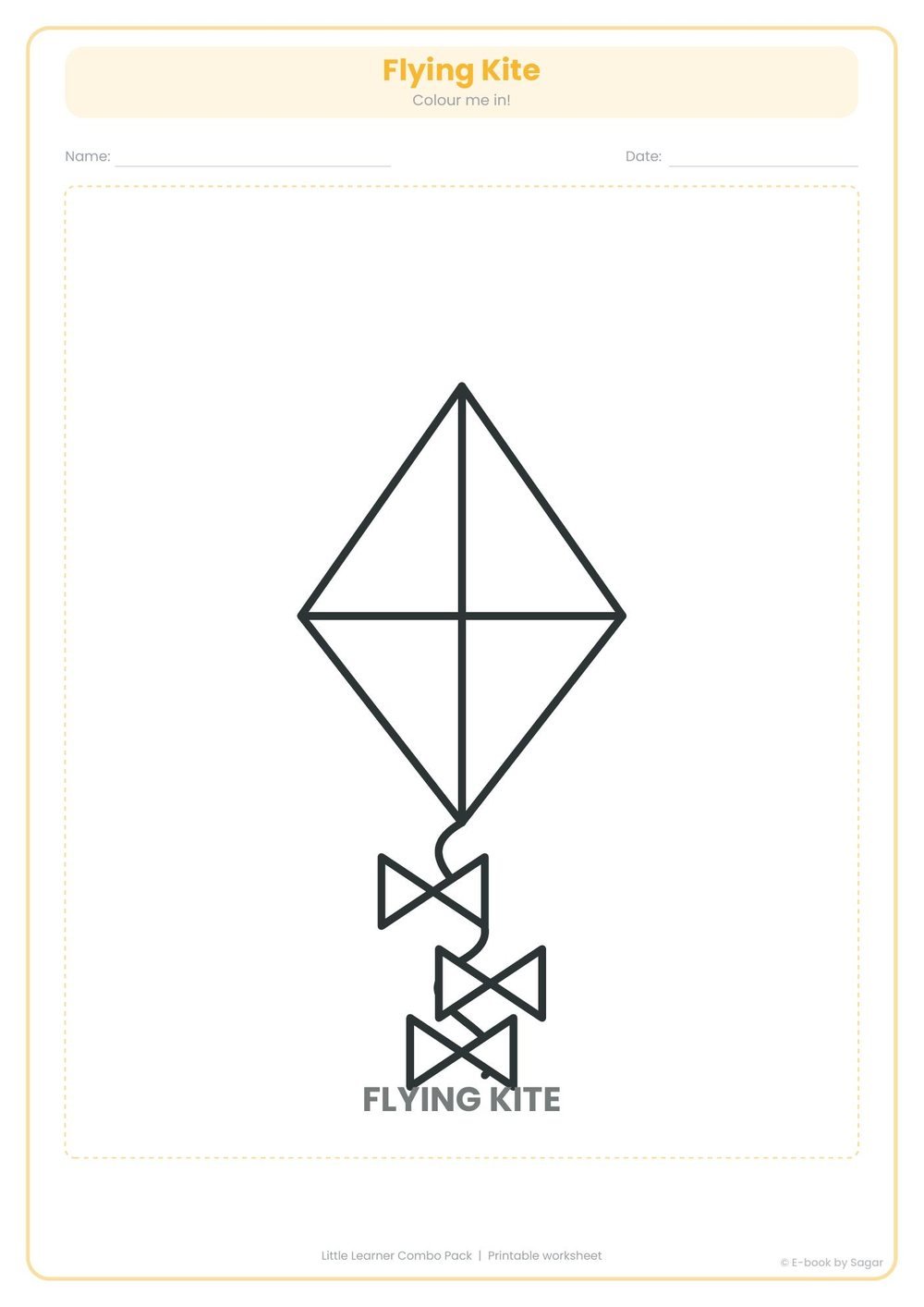
18. Diwali colouring pages (ages 2+)
Colouring a big diya, rangoli or lantern keeps children busy during the busiest hours of cleaning and cooking, and builds the crayon control they need for writing later.
19. Picture talk (ages 3+)
Look at photos from last Diwali together. Ask: "Who is this?" "What are we doing?" "What do you remember?" Talking about pictures builds vocabulary and memory.
5. Helping in the kitchen and around the home
Children feel proud when they do "real" work. These tasks are safe with an adult nearby and build fine motor skills, which our fine motor activities guide explains in detail.
- Rolling ladoos (ages 3+): Once the mixture has cooled, let your child roll small ladoos. Wash hands first; expect odd shapes.
- Decorating the thali (ages 3+): Your child arranges flowers, rice and a diya on the puja plate.
- Filling sweet boxes (ages 3+): Two of each kind in every box — counting and one-to-one matching in action.
- Cleaning their own shelf (ages 2+): Give your child a damp cloth and their toy shelf. Small job, big pride.
- Sorting toys to give away (ages 4+): Choose toys they have outgrown to give to children who have fewer. A gentle lesson in sharing.
- Placing (unlit) diyas (ages 2+): Your child decides where each diya goes on the balcony. An adult lights them later.
One last activity, number 25, is the simplest: on Diwali night, sit together in a dark room for a minute, then light one diya. Watch how much one small light changes the room. Children remember moments like this far longer than any gift.
6. A five-day Diwali activity plan for kids
Diwali is a five-day festival in many homes. Here is a plan that spreads the activities across the week, with one craft and one small learning activity a day. Tick each one off; your progress is saved in this browser.
Our Diwali week
Names and days vary between regions and families, so swap in your own traditions. The point is a little bit every day, not a packed schedule.
7. Firecracker and diya safety for small children
Diwali injuries to young children are common and almost always avoidable. A few simple rules keep the celebration happy:
- Children under six should not handle firecrackers, including sparklers. Sparklers burn at extremely high temperatures and the wire stays hot for a while after they go out.
- Watch from a distance. If your family bursts crackers, keep small children well back, with an adult holding their hand.
- Protect little ears. Loud crackers can frighten toddlers and hurt their ears. Close windows, or offer soft ear muffs or cotton.
- Cotton clothes. Dress children in cotton rather than synthetic fabrics near diyas, and keep dupattas and loose sleeves tied back.
- Diyas up high. Place lit diyas where children cannot reach them, away from curtains and toys.
- Keep water and a first-aid kit ready. For a minor burn, hold it under cool running water for several minutes and see a doctor if it blisters or is large.
- Mind the air. Air quality drops sharply around Diwali in many cities. Children with asthma or allergies may need to stay indoors in the evenings.
8. Questions parents ask
When is Diwali in 2026?
Diwali falls on Sunday, 8 November 2026. Many families celebrate over five days, starting with Dhanteras two days earlier.
What are easy Diwali crafts for toddlers?
Paper plate diyas, handprint diya cards, flower petal rangoli and decorating gift bags with stickers or potato stamps are all safe and easy for two and three year olds.
How can I explain Diwali to a young child?
Keep it short: Ram, Sita and Lakshman came home after a long time away, the night was dark, and people lit lamps to welcome them. Diwali celebrates light winning over darkness. Share your own family's traditions too.
Is it safe for small children to hold sparklers?
Sparklers are not recommended for children under six. They burn at very high temperatures and the wire stays hot after they go out. Let young children watch from a safe distance with an adult.
How do I make rangoli easy for kids?
Draw a simple outline in chalk and let your child fill each part with one colour. Flower petals, coloured rice or dal are easier and safer than fine powder for toddlers.
Something for the busy Diwali hours
The Little Learner Combo Pack has 150 printable worksheets for ages 2 to 6, including colouring pages, tracing, early maths and flashcards. Print a few and keep little hands happy while you get the house ready.
See the worksheets pack — ₹49