
How to teach phonics to kids at home: sounds, blending and CVC words
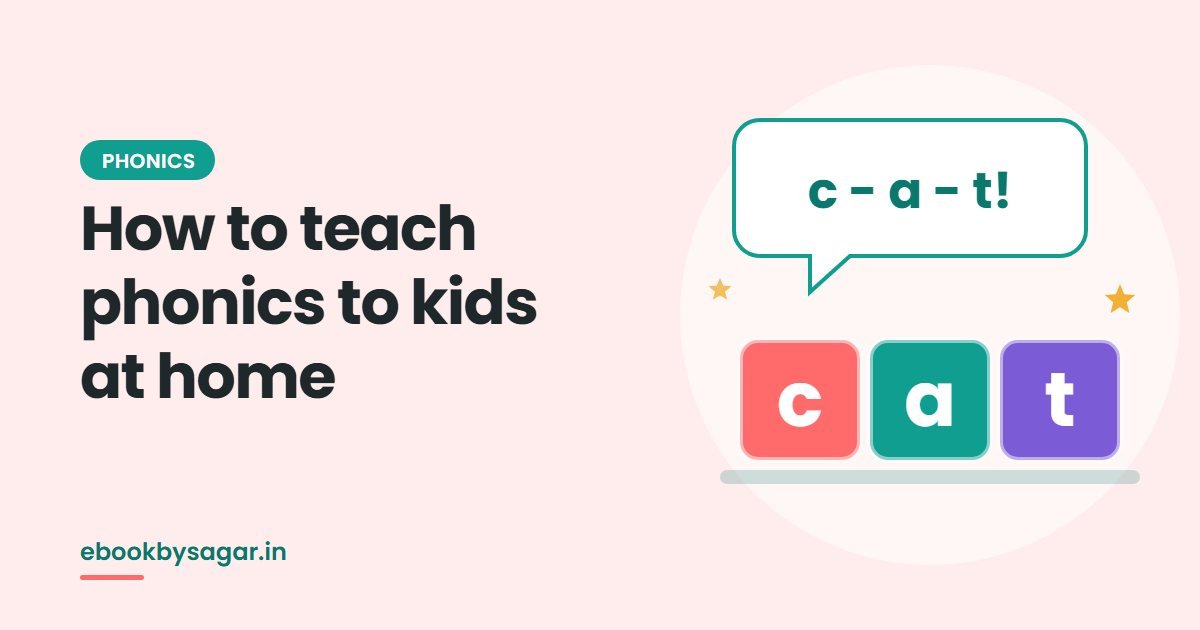
Most Indian parents learnt to read by memorising: "C-A-T, cat." Spell the letter names, then remember the word. It works for a few hundred words, but it leaves a child stuck every time they meet a new one. Phonics works differently. It teaches children the sounds that letters make, and how to blend those sounds into words. Once a child can blend c, a and t into "cat", they can work out "bat", "sat" and "map" on their own.
That is why most schools in India now teach phonics in nursery, LKG and UKG. If you want to support your child at home but are not sure how, this guide is for you. It covers what phonics is, the order to teach sounds, how to teach blending, how to start reading CVC words, and simple games you can play every day — plus an interactive word builder to try with your child right now.
On this page
1. What is phonics?
Phonics is a method of teaching reading by linking sounds (called phonemes) to letters or groups of letters (called graphemes). English has 26 letters but around 44 sounds, so some sounds are written with two letters, such as sh, ch, th and ee.
Phonics gives children two key skills:
- Blending for reading: seeing the letters s-u-n, saying each sound, and pushing them together to hear "sun".
- Segmenting for spelling: hearing the word "sun", breaking it into s-u-n, and writing a letter for each sound.
Popular programmes used in Indian schools, such as Jolly Phonics, follow this same approach. You do not need to buy a programme to help at home; you just need to know the order and say the sounds correctly.
2. The right age to start phonics
Phonics happens in stages, and the early stages start long before a child sees a letter:
- 2 to 3 years: Listening games. Rhymes, animal sounds, clapping syllables in names ("Ar-jun", 2 claps), and noticing words that start with the same sound.
- 3 to 4 years (nursery): Learning the first letter sounds and hearing the first sound in a word: "ball starts with b".
- 4 to 5 years (LKG): Learning most single letter sounds, and blending three-sound words like c-a-t.
- 5 to 6 years (UKG): Two-letter sounds like sh, ch and ee, reading short sentences, and a handful of tricky words.
If your child is still learning to recognise letters at all, start with our guide on how to teach alphabets to kids, and come back here when they know a few letters.
3. Which order to teach letter sounds
Phonics does not go from A to Z. It starts with sounds that make lots of simple words quickly, so children experience reading success in the first few weeks. Jolly Phonics, one of the most widely used programmes, teaches the 42 main sounds in seven groups:
- Group 1s, a, t, i, p, n
- Group 2c/k, e, h, r, m, d
- Group 3g, o, u, l, f, b
- Group 4ai, j, oa, ie, ee, or
- Group 5z, w, ng, v, oo (short), oo (long)
- Group 6y, x, ch, sh, th (soft), th (hard)
- Group 7qu, ou, oi, ue, er, ar
The seven Jolly Phonics sound groups, in teaching order
With just the first group — s, a, t, i, p, n — a child can already read sat, pat, tap, nap, pin, tin, sit, pit, tip, ant and more. That early success is what keeps them motivated. Follow whatever order your child's school uses if you know it, so home and school match.
4. How to teach phonics at home: 6 stages
Stage 1: Build listening skills
Play "I spy with my little eye, something that starts with mmm". Sing rhymes and pause before the rhyming word so your child fills it in. Clap the beats in names. This trains the ear before the eye.
Stage 2: Teach a few sounds at a time
Introduce three or four new sounds a week. For each sound, show the letter, say the sound, add an action or a picture (a snake for s, an ant for a), and find things around the house that start with it.
Stage 3: Practise oral blending
Before reading, practise blending out loud with no letters at all. Say "Can you touch your h-a-t?" or "Where is the c-u-p?" Your child hears the separate sounds and works out the word. This is the single most useful phonics game.
Stage 4: Blend written words
Write a simple word, such as sat. Point to each letter as your child says its sound, then run your finger under the whole word as they say the sounds faster and faster until they hear "sat". Start with two-letter words (at, in, on), then three-letter words.
Stage 5: Segment for spelling
Now reverse it. Say a word, "pin", and ask your child to say the sounds one by one, holding up a finger for each: p-i-n. Then they choose the letters, from magnetic letters or flashcards, to build the word.
Stage 6: Read short sentences
Once your child can blend most CVC words and knows a few tricky words, try short sentences: "A cat sat on a mat." "Is it a big red bus?" Simple decodable books, written using only the sounds a child knows, are ideal here.
Build and blend a CVC word
Tap a letter to change it. Ask your child to say each sound, then blend them into a word. Press Hear the word to check. Some words will be real and some will be silly made-up words — both are great blending practice.
Sound uses your device's built-in voice, so it depends on your browser. Tip: say the sounds yourself first, and use the voice only to check the whole word.
5. CVC words and word families
CVC stands for consonant–vowel–consonant: three-letter words like cat, pen, big, hot and sun. They are the first words children read with phonics because every letter makes its simplest sound.
Grouping CVC words into word families — words that share the same ending — makes reading feel like a pattern rather than a puzzle. Change just the first sound and a new word appears.
| Vowel | Word family | Example words |
|---|---|---|
| a | -at, -an, -ap | cat, hat, mat · fan, man, pan · cap, map, tap |
| e | -en, -et, -ed | hen, pen, ten · jet, net, wet · bed, red, fed |
| i | -ig, -in, -it | big, pig, wig · bin, pin, tin · sit, hit, lit |
| o | -op, -ot, -og | hop, mop, top · dot, hot, pot · dog, fog, log |
| u | -un, -ug, -ut | bun, fun, sun · bug, hug, mug · cut, hut, nut |
Practise one word family a day. Write -at on a card, then swap first letters in front of it: cat, hat, mat, sat. Ask your child which ones are real words and which are silly.
6. Tricky words that do not follow the rules
Some very common English words cannot be sounded out, because they do not follow the usual letter sounds. These are often called tricky words or sight words. Children learn them by sight, a few at a time.
Good first tricky words are: the, I, to, he, she, we, me, be, was, my, you, they, all, are, said. Write each on a card, read it together, and look for it in story books. Two or three new tricky words a week is plenty.
7. 10 phonics games for home
- I spy: "I spy something beginning with p."
- Robot talk: Talk like a robot, saying words in separate sounds: "Get your s-o-ck-s." Your child blends them.
- Sound basket: Fill a basket with things that start with the same sound.
- Odd one out: "Cat, cup, dog — which one starts with a different sound?"
- Rhyme time: Say a word and take turns finding rhymes, even silly ones.
- Word family slide: Write -ug on paper and slide letter cards in front of it.
- Fishing for words: Put paper clips on word cards and "fish" with a magnet on a string. Read what you catch.
- Treasure hunt: Hide CVC word cards with matching objects; your child reads the card and finds the object.
- Sound hopscotch: Chalk letters in squares; your child jumps on the sounds of a word you call out.
- Silly sentences: Build silly sentences with CVC words: "A pig in a wig sat on a big rug."
8. Common phonics mistakes to avoid
- Adding "uh" to sounds. "Buh-a-tuh" makes blending almost impossible. Keep sounds clipped.
- Teaching letter names instead of sounds. Names are useful later; sounds are what children need to read.
- Moving on too fast. If your child cannot blend three-letter words smoothly, more practice at this level helps more than new sounds.
- Guessing from pictures. Encourage your child to sound the word out first, then check with the picture.
- Long sessions. Ten minutes a day, ending while your child still wants more, works best.
- Forgetting to read for fun. Keep reading stories aloud every day. Phonics teaches how to read; stories teach why.
9. Questions parents ask
What is the right age to start phonics?
Listening games can start around two or three. Most children begin learning letter sounds at three to four in nursery, and blend simple words like cat and sun at four to five in LKG.
Which letters should I teach first in phonics?
Start with s, a, t, i, p and n. These six sounds make many simple words, such as sat, pin and tap, so children experience reading success quickly.
What are CVC words?
CVC words are three-letter words made of a consonant, a vowel and a consonant, such as cat, pen, big, hot and sun. Every letter makes its simplest sound, so they are the first words children read with phonics.
What is the difference between letter names and letter sounds?
The letter name is what the letter is called, like bee for B. The letter sound is the sound it makes in words, like the b in ball. Children need the sounds to blend words when reading.
How long does it take for a child to learn phonics?
Most children learn the main single letter sounds over a few months of short daily practice, and blend CVC words within the LKG year. Two-letter sounds and fluent reading develop through UKG and Class 1.
Flashcards, tracing and charts for early readers
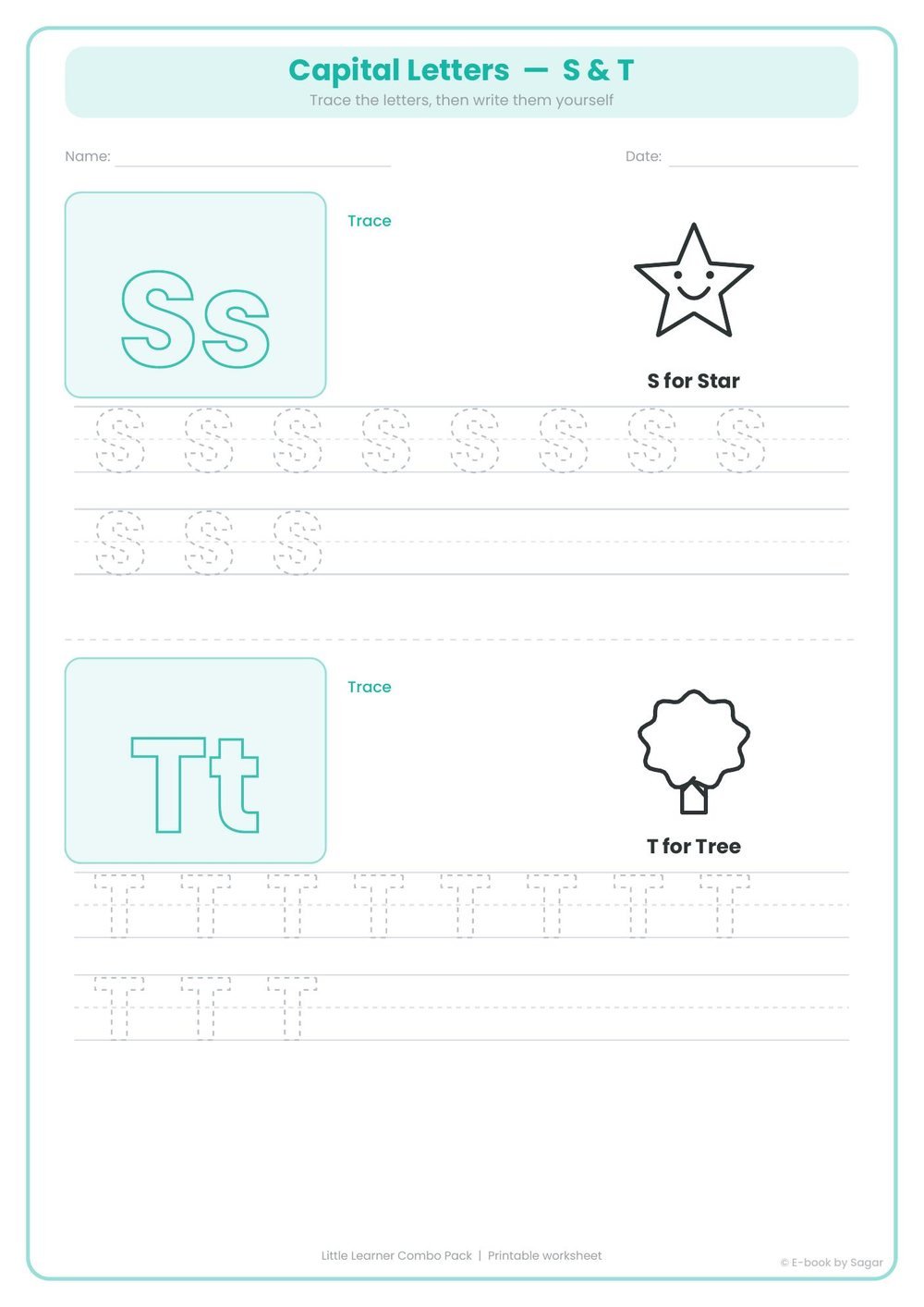
The Little Learner Combo Pack has 150 printable worksheets for ages 2 to 6, including alphabet flashcards, letter tracing, charts and colouring. Print the flashcards and start blending today.
See the worksheets pack — ₹49