
Nursery admission 2027-28: age criteria, documents and how to prepare
If your child was born between April 2023 and March 2024, the next few months matter. Most private schools in India open nursery admission for the 2027-28 session between November 2026 and January 2027, and popular schools fill their seats fast. Parents who start early get to compare schools calmly. Parents who start late fill forms in a panic on the last day.
This guide covers the whole process in plain language: the age your child needs to be, a calculator to check which class they fit, the documents to keep ready, the expected timeline, how points systems work, and what to do about the "interview" that so many parents worry about.
On this page
- Age criteria for nursery admission 2027-28
- Age calculator: which class is my child eligible for?
- Expected admission timeline
- Documents checklist
- How the points system works
- How to choose the right school
- Is there an interview? How to prepare your child
- What to practise at home before nursery
- Questions parents ask
1. Age criteria for nursery admission 2027-28
Under the National Education Policy (NEP) 2020, the first five years of school are called the foundational stage: three years of pre-school (nursery, LKG and UKG, sometimes called Balvatika) followed by Class 1 and Class 2. Many states have now moved to the NEP rule that a child should be six years old for Class 1, which pushes every pre-school class to a matching age.
For the 2027-28 session, the commonly used age limits look like this, with age counted as on 31 March 2027:
| Class | Age on 31 March 2027 | Child born between (approx.) |
|---|---|---|
| Pre-nursery / Playgroup | 2 to below 3 years | Apr 2024 – Mar 2025 |
| Nursery | 3 to below 4 years | Apr 2023 – Mar 2024 |
| LKG / KG | 4 to below 5 years | Apr 2022 – Mar 2023 |
| UKG / Prep | 5 to below 6 years | Apr 2021 – Mar 2022 |
| Class 1 | 6 to below 7 years | Apr 2020 – Mar 2021 |
Delhi follows a 31 March cut-off with a lower and an upper age limit, and has in past years allowed school heads a small relaxation of a few days on either side. Some other states use a different cut-off date (for example 31 May or 31 July), and pre-nursery is offered only by some private schools. If your child's birthday falls close to a cut-off, check the exact rule for your state before deciding the class.
Nursery admission age calculator 2027-28
Enter your child's date of birth. We will work out their age on 31 March 2027 and the class they fit under the age limits above.
Based on the common NEP-aligned limits with a 31 March 2027 cut-off. Your state or school may use a different date, so treat this as a guide.
2. Expected nursery admission timeline for 2027-28
Exact dates change every year, and each state announces its own. Going by previous cycles, especially in Delhi, the 2027-28 season is likely to run roughly like this:
- Oct – Nov 2026Shortlist schools, visit open days, check age rules and points criteria.
- Nov 2026Education department notice; schools publish their criteria and seat counts.
- Nov – Dec 2026Application forms open. Most forms are online; fees are usually small.
- Jan 2027First list of selected children, with points, is put up by each school.
- Jan – Mar 2027Second and later lists, fee payment and document checks.
- Apr 2027New session begins. Many schools start with a short settling-in period.
Expected timeline based on previous years. Confirm the official dates for your state and school.
Seats for the Economically Weaker Section (EWS) and Disadvantaged Group (DG) category, reserved under the Right to Education Act, often follow a separate process. In Delhi, for example, these are filled through a central online lottery run by the Directorate of Education rather than by each school.
3. Documents checklist for nursery admission
Collecting documents takes longer than filling forms, so start now. Keep a scanned copy of each on your phone and a few photocopies in a folder. Use the list below to keep track; your ticks are saved in this browser.
Nursery admission documents
4. How the points system works
Popular schools receive far more applications than they have seats. To decide fairly, many schools (and all private schools in Delhi) use a points system. Each school publishes its criteria and the points for each. Common criteria include:
- Neighbourhood or distance: the closer you live, the more points. This is often the biggest single factor.
- Sibling: points if an elder child already studies in the school.
- Alumni: points if a parent studied there.
- Girl child, first child or single parent: some schools give points for these.
- Transfer case: for parents moving to the city on a job transfer.
Add up your likely points for each school on your list before you apply. A school 12 kilometres away with no sibling or alumni link may be a long shot, while a good school 2 kilometres away may be a near-certainty. Apply to a sensible spread — most parents apply to between eight and fifteen schools in big cities.
If two children have the same points, schools usually break the tie by a draw of lots, often recorded on video. Keep your form number handy so you can check lists quickly.
5. How to choose the right school
Big buildings and smart boards are easy to notice on a visit. The things that shape your child's early years are quieter. When you visit, look for:
- Class size and teacher ratio. In nursery, fewer children per adult means more attention. Ask how many children are in a section and whether there is a helper (an ayah or assistant) in each room.
- Play-based learning. Nursery should be full of play, songs, stories and hands-on activities. Be wary of schools that proudly show three year olds writing pages of letters.
- Commute time. A 50-minute bus ride each way is tiring for a three year old. Most experts and experienced parents would choose a good school nearby over a famous school far away.
- Safety and hygiene. Child-sized toilets, CCTV, a clear pick-up process, a nurse or first-aid room.
- Total fee. Ask for the full fee structure, including admission charge, annual charges, transport and uniform, not just the monthly tuition fee.
- Board and continuity. Check which board the school follows and whether your child can continue in the same school after UKG without another admission round.
6. Is there an interview? How to prepare your child
This is the question parents ask most, so here is a clear answer. The Right to Education Act prohibits schools from screening children or parents for admission to the entry class. That is why Delhi and several other states do not allow nursery interviews and use points and draws instead.
In practice, many private schools in other cities still hold an informal interaction — a short, friendly chat with the parents while the child plays nearby. It is not a test. Schools mainly want to see that the child is comfortable and that the parents understand the school's approach.
Questions schools often ask parents
- Why have you chosen this school?
- How does your child spend a typical day? What do they enjoy?
- Who looks after the child at home, and who will do pick-up and drop?
- How do you handle screen time and tantrums?
- What are your expectations from the school?
Simple ways to get your child ready
- Practise saying their name. Many children go quiet with strangers. Play a game where a toy asks "What is your name?".
- Visit new places. A park, a library, a relative's home. Children who are used to new spaces settle faster.
- Read picture books together. Pointing at pictures and naming colours, animals and objects is exactly the kind of talk a teacher will try.
- Do not drill answers. A three year old reciting rehearsed lines looks stressed, not clever. Teachers can tell.
7. What to practise at home before nursery
No school expects a three year old to read or write. What really helps a child settle into nursery is a set of everyday skills:
| Skill area | What it looks like at 3 |
|---|---|
| Independence | Drinks from a cup or bottle, tries to eat alone, tells an adult when they need the toilet |
| Talking | Says their name, asks for water or help, follows a simple instruction |
| Hands | Holds a fat crayon, scribbles, turns pages, stacks blocks |
| Social | Plays next to other children, begins to take turns, can stay with another adult for a while |
| Early learning | Enjoys songs and rhymes, knows a few colours and shapes, counts along to 5 |
Hand skills deserve special attention because they are the foundation for writing later on. Our guide to fine motor skills activities has thirty easy ideas for home, and how to teach a child to hold a pencil covers the next step. For the year after nursery, see what a child should know before LKG.
8. Questions parents ask
What is the age for nursery admission in 2027-28?
Under the NEP-aligned rules that Delhi and many states follow, a child should be 3 years old, and below 4, on 31 March 2027 for nursery in the 2027-28 session. That means children born roughly between April 2023 and March 2024. Some states use a different cut-off date, so check your state's notice.
When will nursery admission forms for 2027-28 open?
Dates are not announced yet. Based on previous years, most private schools are expected to release forms between November 2026 and January 2027, with first lists in January or February 2027. Confirm with your state education department and each school.
Which documents are needed for nursery admission?
Usually the child's birth certificate, address proof, the child's Aadhaar, passport-size photos and parents' ID proof. You may also need sibling or alumni proof, a category certificate for EWS/DG seats, and an immunisation record, depending on the school.
Do schools take interviews for nursery admission?
The Right to Education Act does not allow schools to screen children or parents for the entry class, which is why Delhi uses a points system and draws. Some private schools in other cities hold an informal interaction with parents. It is a conversation, not a test for the child.
How many schools should I apply to for nursery?
In big cities, many parents apply to between eight and fifteen schools. Work out your likely points for each school, especially neighbourhood points, and include a mix of schools where your chances are strong.
What should my child know before joining nursery?
No reading or writing is expected. It helps if your child can say their name, ask for water or the toilet, eat with some independence, hold a crayon and play near other children. Songs, stories and simple hand activities are the best preparation.
Get your child nursery-ready, 15 minutes a day
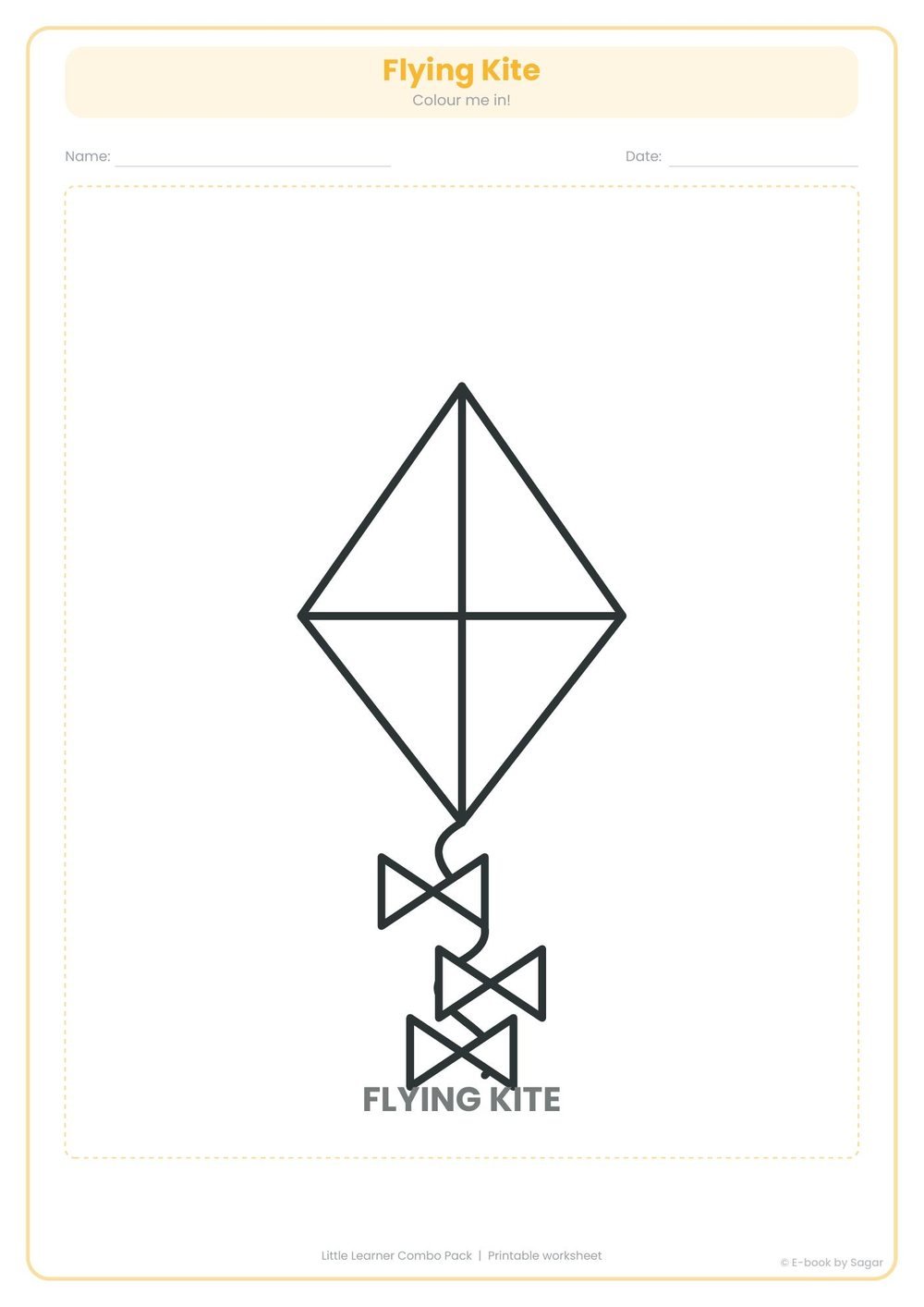
The Little Learner Combo Pack has 150 printable worksheets for ages 2 to 6: pre-writing strokes, colouring, tracing, early maths, flashcards and charts. Download once, print as often as you like.
See the worksheets pack — ₹49